Our Journal
Not All Batiste Fabric is Created Equal
What is Batiste fabric? Technically, Batiste is a weave and can be made from many fibers, but Batiste has been synonymous with cotton for so long that people simply think Batiste fabric is always 100% cotton fabric. Here is a little about the characteristics of Batiste, and these are based on the properties of cotton cloth.
Also known as: Lawn or Cambric (Named for what is now the city of Cambrai, France)
Thread count: As low as 90 threads per inch up to 350 threads per inch.
Wicks moisture well and breathes well.
Generally not a good insulator.
Types of Batiste
1. Cotton Batiste is made from high-quality cotton fibers and is known for its softness, breathe-ability, and natural drape. It is often used for lightweight dresses, blouses, and baby garments. This Batiste is also segregated by the type of cotton used. Pima Cotton Batiste is often referred to simply as Satin Batiste or Heirloom Batiste. This is a very fine quality fabric and, as of July 2024, can be had for about $10 - $15 per yard, with Pima running slightly higher.
2. 100% cotton Swiss batiste is renowned for its ultra-fine and sheer quality. It is intricately woven using high-quality cotton threads and is commonly employed for delicate lingerie, heirloom sewing, and elegant draperies. This is a very fine fabric and will run as much as $34 - $36 per yard for the high quality product.
3. Swiss Nelona Batiste is the top of the heap for cotton Batiste. At one time, Nelona meant that the Batiste was made by one specific manufacturer, but this manufacturer has gone out of business and the name is now no longer protected. Still, manufacturers who produce under this name for their fabrics generally reserve Nelona as the best they offer. A good Batiste baring the Nelona name can run over between $40 and $50 per yard, mostly on the upper end of that range.
What about Imperial Batiste?
Imperial Batiste has a name that sounds a lot like it should be the best Batiste you can buy, and for some applications it is a good fabric, but it is not 100% cotton. Imperial is 65% polyester.
Linen: Although rare, garments can be found made from Linen Batiste. I have never seen this fabric myself but would love to make a gown out of it.
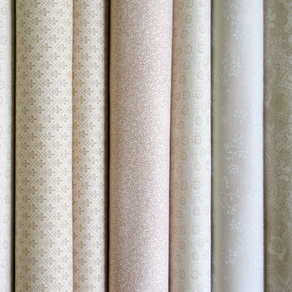
Fabric Selection - The Polyester of Things
I have been asked why we don't use polyester, rayon, nylon or viscose fabrics in our gowns and there are a number of good reasons. First, let me tell you what we are comparing these synthetic fibers to, what we do use. Our garments are made of cotton, linen and silk. The synthetics have some advantages over these fabrics, primarily in their wrinkling characteristics and low cost. On the negative side, there is the fact that polyester fabrics and not breathable or absorbent, leading to moisture accumulation. Some modern synthetics and weaves are moisture wicking but these are thin. Synthetics can contribute to overheating, skin irritation, and odor retention. From an ecological perspective their production process harms environment through emissions and waste. If the polyester is low quality, it may pill, snag, or lose shape. All polyester generates static and in a cold dry winter, constantly zapping yourself or your baby is something you will tire of very quickly. Finally, polyester does not burn, it melts when exposed to flames, and then it stinks.
For the purposes of our products, I want to look at the negatives in light of the items we produce. Christening gowns are not a long term wear item. However, they are being worn by a baby with soft and sensitive skin and whose temperature regulation is not well developed. This makes the problems with skin irritation, snagging and loss of shape something that must be considered. By choosing more natural fibers, we can avoid these problems.
We work in silk primarily because of the look it can achieve, the way it drapes, its ability to breathe and its luxurious feel against baby's skin. It isn't called the queen of fabrics for no reason. Still, silk has its negatives and they are significant. The first is cost, both to buy and maintain. Mind you, the purchase cost difference between a fine silk and a fine linen or cotton Batiste is not as much as you would expect. Another is the fact that silk will water stain easily and these stains are difficult to remove. Silk is also a difficult fabric to sew but we do so because many people want a silk gown. The look and the fact that it will be a seldom-worn family heirloom makes the negatives a lot less worrisome.
Linen has much to offer but one fairly important drawback. It is a tough durable fabric that breathes well to keep you cool and dry, stays strong even after repeated washes, gets softer as it ages, It maintains a delicate appearance and resists moths. Now for the drawback, almost nothing holds a good wrinkle like linen. This means that an iron will be required to keep your gown looking its best. You can get linen blends that minimize the wrinkle problem, but generally you lose that crisp linen look when you add other fibers.
Arguably, cotton is the best of all worlds. It can look nearly as luxurious as silk, wicks moisture well and is breathable. Cotton is also durable and not prone to pilling. Batiste cotton, the most common type used for baptism gowns, is soft against baby's skin and is easy to care for. On the negative side, it will wrinkle, but generally not as bad as linen. With Batiste, steaming can do much to remove wrinkles but to get the very best result you will need to iron it as well.
What does all this mean? For fabric selection, no matter what fabric you choose, there will be a mix of good and bad. Given that the gown is destined to be worn by a baby, it is our opinion that synthetic materials have too many drawbacks for the child and that natural fibers, especially linen and cotton, are simply the better choice.
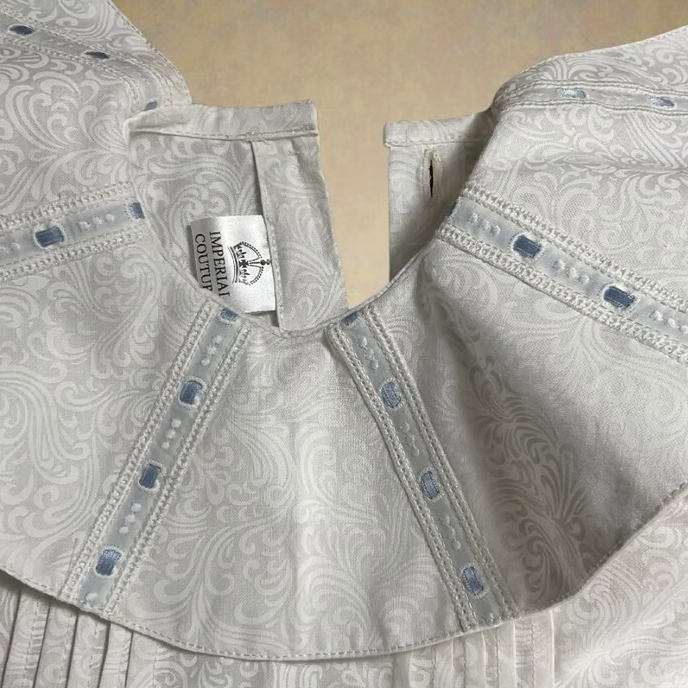
How to tell quality clothing
Price is not a good measure of how to identify quality clothing.
Okay folks, settle in, I know blogs are supposed to be short but this clothing blog is lengthy. Yes, many of you are asking yourself if any clothing or fashion blog is worth more than 2 – 3 minutes of read time. Well, this one has actual health implications for anyone who wears clothes. So, unless you are a naturist, you need to sit, grab a cup of coffee or tea, and settle in for a NECESSARY read.
The old adage that says “you get what you pay for” is not always accurate but in the case of clothing, price can reflect quality to some extent. For example, some shirts are very expensive because of the name brand or the department store that it’s sold in has to maintain a certain profit margin. Or, perhaps it’s a handmade shirt that is constructed from remarkable fabric with a unique design or pattern, custom fitted (not tailored after the fact) to your body, with an amazing bespoke experience to boot. The price then is justified because of the quality of the product.
So – as a generalization – price can be tricky when determining the quality of the article of clothing. It’s not a clear indicator but can definitely point you in the right direction
The sad fact is, catchy designs and embellishments that are priced to complete with simple plain quality clothing have cost cutting steps in their construction. Some of these cost cutting steps erode quality, and some can be downright dangerous. Take Shein and Temu Clothing for example:
Toxic fabrics in Shein’s clothes: what are the materials to avoid?
https://www.cimmino.com/en/toxic-fabrics-in-sheins-clothes-what-are-the-materials-to-avoid/
Government warns of high levels of toxic chemicals found in Shein products
Taking the shine off SHEIN: Hazardous chemicals in SHEIN products break EU regulations, new report finds
Shein and Temu products found to contain high levels of toxic chemicals
Yes, you got that right. Clothing quality has ceased to be about simply how long your outfit lasts, now it’s about clothes that can give you cancer. All of a sudden, discerning quality enters a whole new light.
Often times, brands earn their position of being known as high quality. This has been done over decades using proven, detailed and painstaking manufacturing techniques that produce stellar menswear, womenswear or children's items. However, what has happened over the last few years, with the enormous and uncharted growth of some companies is the acquiring of quality brands. Once this happens, it’s not unusual for quality to suffer because of business practices such as cost-cutting, labor reductions, outsourcing manufacturing to cheaper companies/countries, etc. When this happens, quality tends to diminish.
With that being said, brand recognition can still hint at you that a particular brand’s pieces are well made. It may require you to do some research beforehand to verify the current state of a brand, but for the discerning consumer, it is time well spent.
Attention to detail is more difficult to quickly notice but it’s a foolproof way to determine quality. To be able to notice small yet valuable details requires you as the consumer and style maven to have done your homework. It necessitates that you do a little reading, talk to your local haberdasher, and other forms of research so that you can know the makings of quality fabric or the different types of stitching that will indicate that something has been handmade or at least machine made to a high standard.
I’ve mentioned handmade a few times and let me explain why. I’m not saying that if an item isn’t handmade it isn’t high quality. However, when an item is handmade, there are usually time-intensive details and require a great level of care that are put into the crafting of the item. It shows that the tailor/seamstress/company/brand/manufacturer didn’t cut corners.
For example, let’s take a quality men’s dress shirt. Look at these components:
Weight/thickness of the fabric
Consistency of the fabric weave
Collar construction; is it sturdy and well made
Stitching per inch (at least 14 stitches/inch) – this is because the more stitches per inch, the stronger the seams will be, thus the shirt is less likely to come apart over time
Is there a split yoke versus a solid panel on the upper back of the shirt? Split yokes have a better fit.
Is there a Gusset (A triangular or diamond shaped insert, as in the seam of a garment, for added strength or expansion) attached to the bottom of the side panels to reduce the stress of form-fitting shirts?
These are all indicators of a manufacturer taking time and effort to make a garment that will last, and these tips apply to many more things than men’s shirts. What is key here is the appropriateness of the cloth and the thickness chosen. The cloth needs to thick enough to wear well without being see-through (unless sheer fabric is chosen specifically to be translucent) and thin enough for heat and moisture control. Clothing that is made with generous amounts of material is typically high quality and will be comfortable, maintain its appearance, and last for many years. Hold the garment up to the light and see if much light penetrates it. The more light, the thinner, cooler and generally shorter life you will get.
Look at buttons.
Whether it’s the buttons on a jacket, blouse, skirt or shirt, it’s a noticeable detail that speaks volumes in terms of quality.
Type of buttons: Buttons are made of many things, including shell, wood, leather, horn, glass, coconut, metal, fabric, plastic and ceramic materials. Mother of pearl buttons and other buttons from real shell are rarer thus will be more expensive as opposed to standard plastic buttons. While high grade thermal plastic make fine buttons that can give years of service, lower grades of plastic buttons are more apt to cracking and breaking.
Metal buttons are known for strength and timeless appeal, but the quality of the metal means everything. Some resist corrosion with resilience and some will show signs of oxidation in short order. Generally, copper and alloys of zinc make better buttons than iron, which is very susceptible to rusting. Brass, stainless steel and nickel alloys are also good choices.
Wooden buttons are eco-friendly buttons add a natural charm to garments. Their quality depends on the wood type, finish, and resistance to cracking. However, repeated washing can change the look of the button, sometimes significantly.
Resin buttons are often used in high-fashion garments and can be molded into various shapes and patterns. The quality of the resin button shows in the smoothness of the mold and the stability of the color.
The type of button is also important. Shank Buttons have a loop on the back and sew-through buttons have 2 – 4 holes on the face. Shank buttons are a must for heavy clothing while sew-through are best for lightweight fabrics and a flat, streamlined finish.
Thickness is also important. Buttons should be at least 3mm thick for best wear.
Buttonholes: Sturdy buttonholes with a high stitch count are signs of a quality garment. For lightweight clothing, the thread thickness is usually the same as the rest of the garment,but for thick or heavy duty garments, the thread should be thicker than that used elsewhere.
Fabric materials (Fibers)
Look for a high content of natural fibers. High quality clothes generally have a high or very high percentage of natural fibers. But don’t be fooled, a lot of cheaply made clothes use these same materials. Although natural fibers are more expensive and don’t always last as long as synthetics, they have the distinct advantage of being moisture wicking and do not retain odors.
High quality clothing is often made of wool, cotton, cashmere, and silk. Natural fiber and synthetic blends can be okay, if most of the material is natural. Blended fabric may tend to last long and hold shape a lot better than cloths just made of natural fiber, but natural fibers tend to drape better. On the hangar, a quality garment will still drape well. Also, look at how much the material will scratch your skin? Would you want to be in that shirt, blouse, skirt or pair of trousers for eight hours?
A consistent weave reflects the quality of the manufacturer that made the cloth and should not be underestimated. No manufacturer makes error free cloth. Somewhere, sometime, there will be a problem that will result in a place in the bolt of fabric being messed up. Low quality manufacturers will not care, good manufactures will have some standard for when that section of fabric should not be used,and great manufacturers simply remove the imperfection from production without a second thought.
Fabric cutting: Many bespoke clothing manufacturers have people that specialize in just cutting pieces from the fabric for someone else to sew together. This is because cutting is EXTREMELY important to a quality garment. The fabric must be cut on the warp. Warp are the yarns that run parallel to the fabric edges (the length of the fabric). Fabric cut the other way (on the weave) will have different stretch characteristics and seams here will twist and you can’t fix it. Cheap manufacturers will think nothing of cutting on the weave, it will use less fabric to make one garment and and lower costs, at YOUR expense.
Zippers: The zipper material can tell you a lot about the quality of a garment. Plastic parts are an indicator that a piece of clothing is cheaply made. Instead, look for metal zippers. For women’s fashion, this isn’t always practical. Those synthetic hidden zippers in the back of your dress generally lie flatter and are much more easily worked, especially if you are alone. On those occasions when you decide that a synthetic zipper is the way to go, look and see how it is sewn in. Did the manufacturer use a zipper that has a thick and tightly woven tape with enough width to allow it to be sewn in securely? If not, it’s a pass. Is the slider well made? Are all of the teeth evenly spaced? Does the zipper slide smoothly? When it comes to strength, metal zippers are strongest, molded plastic come next and nylon is the weakest. Why would you choose anything but metal? Well, molded plastic is weather resistant and nylon has the advantage of being the most flexible, making it just the right thing for that little black dress.
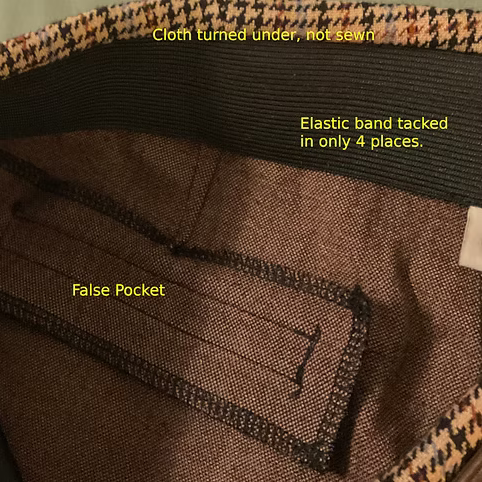
Look for extras. Does the garment come with a spare buttons? Is there generous fabric at the seams? Manufacturer’s try to save fabric by sewing very close to the edge. This is done because, over thousands of garments, the savings really do add up. What it does to you is result in a seam that cannot be let out ANY, and also a seam that, if not serged, can quickly unravel down to the stitching, ruining the entire garment. At key stress areas, does the garment have facing fabric sewn in to strengthen the construction?
A word on serging: The purpose of serging is to secure edges, NOT to sew cloth pieces together. HOWEVER, as serger machines have become more popular, there are 5 thread serge stitches that are strong enough to be used in garment construction. These stitches incorporate a stitch that secures the fabric edge with a two thread chain stitch that actually provides the seam strength.
Is the garment lined? Lining is the material put in between the inner and outer fabric of jackets and similar pieces of clothing. Lining serves many purposes but one important one is to protect the seams. There was a time that tailors and seamstresses took pride in the inside of a garment looking s good and clean as the outside. If you can find this, you are on the right track.
Look at seams. While lining tends to indicate a quality garment, lack of lining does not mean a bad one. For unlined garments, seams should be bias covered or protected by lining and ironed flat. Avoid small seam allowances. Seam allowances are a balance between bulkiness/drape and the ability to alter the garment later.
Focus on good stitch work. Good stitching work is one of the best indications that a piece of clothing is high quality. If the stitch work is poor, chances are that the item was cheaply made and uses cheap materials. Look for:
Stitching work with many stitches per inch. Generally, the more the better.
Extra top stitching.
Buttons and other pieces that are securely sown to the fabric.
Hem work that is fully finished. For example, if the hem appears loosely stitched inside or is lacking thread, the clothing is probably low quality.
Uniform and straight
No missed stitches
No loose stitches
No crooked lines or seams
Make sure the fabric patterns line up with seams
Look for appropriate stitch length
There are a number of types of stitches. The basting stitch is a long stitch that is quicker to and remove. They are sometimes seen in finished clothing and are meant to be removed, either at the final alterations after a garment is purchased or by the end consumer after delivery. These stitches hold labels on the garment that are obviously meant to be removed or to keep parts of the garment from moving while in storage or transport. These stitches are usually lightweight thread, white, and long for easy removal. Aside from these basting stitches, I can think of no other reasons for basting stitches to remain in a finished garment.
Lightweight and sheer fabrics require a shorter stitch length to prevent pulling and gathering while a longer stitch works better for heavier fabrics. Seams done with a shorter stitch (more stitches per inch or centimeter result in a stronger seam, but a shorter stitch can also shred some fabrics. Thick threads need a longer stitch and finer threads need a shorter stitch and a shorter stitch length is better for smooth curves – a long stitch may make the curve look angular.
Final items, look for loose threads, they show a lack of attention to detail. Observe how the garment drapes to see if cloth puckers where it should not and avoid garments that are not washable.
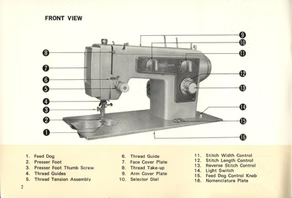
The Sears Kenmore 158.1303 Sewing Machine
I wanted to take just a minute and tell you about another of my machines, its a 1969 Sears Kenmore 158.13033 sewing machine with zigzag capability.. This machine was my husband's before we were married and it belonged to his grandmother. It gave her years of diligent service and was well cared for.
To be sure, this is not a machine I would use for heirloom sewing as the needle plate has an oval shaped opening to accommodate the zigzag function. This means that sheer lightweight fabrics can be forced down below the sewing surface and this can cause problems including bird nesting of the thread on the bobbin side. For heirloom sewing or sheer fabrics, I recommend using a straight stitch machine whenever possible, or, if your modern machine has a straight stitch plate, use that. This is why my heirloom sewing machines are my Bernina 735, Singer Featherweight, Singer 401 and my Singer 301.
What, then, is this machine good for? Well, quilting is an obvious answer but I am not a quilter, at least not very often. This machine excels at clothing construction using medium and heavy weight fabrics, like this dress I am currently working on.
I have yet to join the front and back of this dress and am looking at how it drapes presently. The dress is lined, making for two layers of medium weight cotton. Where seams come together, I'm sewing four or more layers of fabric. This Kenmore is a workhorse and has no problem with these multiple layers. Yes, my Featherweight could do the job, and do it well, but that is a lightweight machine and is really not built for that kind of task on a repeated basis. To be honest, my Singer 401 and 301 would also be good choices for this.
My machine was made in 1968 or 1969. I know this because it was purchased new in December 1969. At that time, Kenmore was made by Free Westinghouse and their quality workmanship helped increase the brand's reputation. These machines were built to last and many of the Free Westinghouse machines are highly sought after by sewing enthusiasts due to their durability and innovative features. My model, the 158.13033 is, for some reason, not one that is available in great numbers as a used machine, I do not know if this is because owners do not want to part with them or because they were not made in great numbers. I do know that it is not because of quality issues. Mine runs flawlessly and can produce a satin stitch that makes my Bernina envious..
Kenmore produced a few machines in this model line, they are the 158.1303, 158.13030, 158.13031, 158.13032, and 158.13033. There are differences between the models, but those are largely the look of the machine not the mechanics. Therefore, the manual I have provided here will suffice for any machine in this model line. This manual is a scanned copy of the original which i still have with my machine.
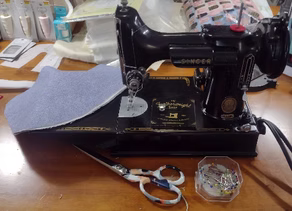
Sometimes older is better
As I work to finish some toddler clothes for summer and fall, a pin that fell into my Bernina 735 resulted in a trip to my local sewing and quilting store. This meant that my main sewing machine was out of commission for about a week. Anyone who takes sewing seriously knows how this can result in a really grumpy seamstress. My husband recommended that I pull out my Singer Featherweight (model 221). Last Christmas, he bought me a large number of sewing feet for this machine and reminded me that all those old gowns I had seen and loved on-line were likely sewn on a machine not unlike this one. I took out my Featherweight and asked him to make sure that it was properly lubricated, a task that took him about 15 minutes. Then I wound a new bobbin and went to work.
What I experienced was nothing short of therapeutic. Gone was the display screen, need to call out stitch widths, stitch lengths, program feet numbers, digitally set tensions, and the need to worry about a number of sensors and what they all mean. Don't misunderstand, I love my Bernina and would recommend it to anyone. It's a great machine, and with the ability to move the needle and zig-zag, it can do stitches that the Featherweight couldn't even dream about. But, there is something to be said for a machine that gives you feedback in the very way it feels, where you can turn one dial or move one lever and feel the machine change as it responds to what your mind wants it to accomplish. While my Bernina will be back on my sewing table in short order, this little Singer Featherweight will not be once again relegated to its case in the corner. It has earned a place in my sewing area where it will be readily available, and if you think it can't do much, you would be surprised at the feet and what this machine really can accomplish. Yes, I can even do button holes and zig-zag!
My collection includes a 1969 Kenmore, a Singer 301 and a Singer 401 in addition to my Featherweight and my Bernina 735. I'm going to have to set aside some time to take out the 401 and 301 and give them a try. I do use the Kenmore and have discovered that it is not a great machine for thin fabrics like Batiste but excels when using thicker fabrics like quilting fabrics, flannel, corduroy, etc.
Happy Sewing
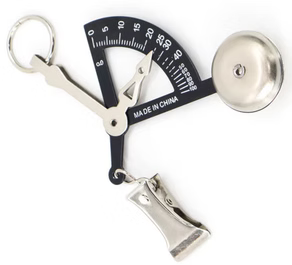
Bobbin Tension Really is Important
When using an older machine, and by older I mean one that isn't electronic, bobbin tension is a very important thing to consider and something that you have to set manually. If the tension is not correct, it can lead to skipped stitches, bird-nesting (that incredible tangle on the bottom side of the fabric you are sewing) and stitches that looks puckered. The overall result is a garment or quilt that does not look its best.
What should the stitch look like? If you picture the fabric as a thin piece of plywood, the bobbin thread and the thread from the needle should be balanced. That is, the stitch should be constructed such that the thread from the bobbin stays on the bottom, only coming half way up the needle hole where it meets the needle thread and passes over it to hold it in place. Too much tension and the needle thread is visible on the bottom of the fabric and too little tension and the bobbin thread is visible on top of the fabric. For a thicker fabric, like denim, if the bobbin and needle thread tensions are balanced then you should be able to use a blue thread on top and a white thread in the bobbin and have no way to tell just by looking at the finished garment. For thin threads like Batiste, this really is not possible but the puckering or skipped/gappy stitch effects are more noticeable.
What do you do? Use a bobbin tension tester. For Singer Featherweight machines, the bobbin tension is ideally 23 grams, give or take a gram. The tension is adjustable on the bobbin case using a screwdriver. Simply put the threaded bobbin in the bobbin case and attach the thread tail to the clip on the meter. Gently pull the bobbin case until the thread starts to unwind. Then make adjustments to the bobbin case tension screw as needed. You can see this done here. As the Singer 99 shares a lot of parts with the featherweight, including the bobbin and case, I'm going to venture a guess that 23 grams or 4/5 of an ounce would also be a good tension for that machine.
Do different fabrics require bobbin tension adjustments? Yes they do. For these, you are going to have to look at a sample of the machine's stitches using a scrap of the fabric you will be sewing. When sewing with a very fine or very fabric or thick thread, a change to the bobbin thread tension may be necessary for the stitches to look right. If the bobbin thread keeps breaking when you sew, that is a clue that the bobbin tension may not be where it needs to be.
In closing,I want to pass along three web sites that I have used to buy items for both my featherweight and my 99. They are:
Patterns from Heck
I am writing this blog post as a cautionary tale for people that have found heirloom sewing in the last 7 - 8 years. While I love to sew, I also spend time reading sewing books and magazines and watching sewing videos on social media sites. Many of the videos I see are a satisfactory distraction but I have found a few that are truly exemplary. This is important for later, I promise.
Like many people who love to sew, my collection of fabric is rivaled only by my collection of patterns. My husband and I used to thrift shop and frequent garage sales, and we still do on occasion. I found that I would run across some wonderful patterns for children's clothing, and more often than you would expect, they are uncut. Getting patterns on sale is a rush, and $1 patterns (or less) feels great when you buy them.
Lately, I've been busting out some of these patterns and I am finding that a certain set are proving problematic. At first I thought it was just me. I was reading them wrong, missing something or had made a mistake. That was where I was tonight. I was happily sewing away on a pattern from 2011 and got to a point where I read the next step in the instructions. All of a sudden, it didn't make sense. I went back and re-read it and took a look at my cut fabric and realized that their instructions were the basic equivalent of 1 + 1 = 3!
My initial reaction was to thank those people who wrote the pattern instructions, raise my voice, and inform both them and my ceiling that there is a special place for those who write pattern instructions incorrectly. All that work, USELESS! Well, nearly so. I will be able to salvage the garment but will have to sacrifice a bit of skirt to do it.
This is where my husband chimed in. He reminded me that the really good YouTube channel I love to watch posts corrected instructions, ones that she has written herself, for a number of patterns that she uses for the garments she sews on YouTube. He's downloaded them for me. At this, I breathed a sign of relief. It's NOT ME! This genre from that time, say late 1990s through about 2010 have a NUMBER of patterns that are just plain confusing.
So, what to do. Well, more modern patterns appear to have more thought behind their instructions and I don't have nearly the problems with them that I do the ones from "that certain time." I find that web searches can turn up free copies of corrected pattern instructions. That was the case this evening and now I have the right instructions for the dress I am making.
Where am I going? I guess it's a nickel's worth of free advice. If you buy heirloom clothing patterns from "that certain genre and time" go look for updated instructions, and look beyond the author as the sewing community will post on blogs telling others how they solved these problems. It's either that or simply steer clear completely and avoid the stress.
As for that YouTube channel, check out Oxford Heirlooms, she's great.